
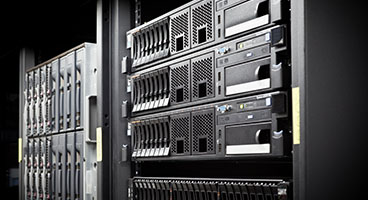



Backup and Recovery System

Backup and Recovery System CBN's Data Localisation

In today's data-driven world, your digital assets are essential for business continuity. Data loss, however, can cripple operations and cause significant financial setbacks. Infodata Professional Services offers a reliable Backup and Recovery System – your digital safety net – to ensure your critical data is always protected and readily recoverable.

Core Functionalities of the Backup and Recovery System

Our Backup and Recovery System goes beyond simply copying data. It's a comprehensive strategy that safeguards your information and facilitates swift restoration in case of data loss:

Backup and Recovery System CBN's Data Localisation
  • Automated Backups

    We configure automated backups to run regularly, ensuring your critical data is captured at designated intervals. This minimizes the risk of losing valuable information due to human error or unexpected events.

  • Secure Storage

    Backups are securely stored in geographically dispersed locations, either on-site, off-site, or in the cloud. This redundancy protects your data from physical disasters, hardware failures, and even cyberattacks.

  • Granular Recovery

    Our system allows for granular recovery, enabling you to restore specific files, folders, or entire systems depending on your needs. This minimizes downtime and streamlines the recovery process.

  • Data Verification

    Regular data verification ensures the integrity of your backups. This guarantees you can restore clean, uncorrupted data in case of a recovery situation.

  • Disaster Recovery Integration

    The Backup and Recovery System seamlessly integrates with your overall Business Continuity plan. This ensures a coordinated response to disruptions and minimizes downtime in the event of a disaster.

Features of Infodata's Backup and Recovery System

Infodata's Backup and Recovery System boasts a robust feature set:

  • Automated Scheduling and Alerts

    Set automated backup schedules and receive alerts for any issues, ensuring your data protection remains on track.

  • Encryption

    Protect your data at rest and in transit with industry-standard encryption, adding an extra layer of security.

  • Scalability

    Our system scales to accommodate your growing data needs, ensuring continued protection as your business expands

  • 24/7 Support

    Our team of experts is available around the clock to assist you with any challenges or recovery processes.

Contact Infodata Professional Services today for a free consultation!

We will assess your specific needs and design a customized Backup and Recovery System that safeguards your critical data and ensures your business continuity.

Our Process

Secure Your Organization’s System In 4 Steps

Let's explore solutions to comprehensively secure your organization's Backup and Recovery System.

1

Request Consultation

Begin by filling out our form to provide project details. Your input guides us in tailoring solutions to meet your IT needs effectively.

2

Requirement Gathering

Let's gain more clarity on your pain points and objectives. We'll explore approach, timelines, and other required criteria.

3

Review and Alignment

Based on discussions, an implementation plan with milestones, budgets and more is shared and reviewed with you.

4

Deployment

All required resources for the successful and timely implementation of a Backup and Recovery System project are activated.

Request Consultation Today With our Backup and Recovery System Expert.​

Request Solution++

Our Blog

Explore our Latest Insights

Get up to speed on the latest news, trends, insights and more.

5 Disaster Recovery Essential For Every Modern Business

5 Disaster Recovery Essential For Every Modern Business    Introduction  Every organization relies on technology to deliver services, support employees, process  transactions, and serve customers. When systems become unavailable even for a short period  the consequences can be immediate. Revenue is lost, customer confidence declines, operations  stall, and regulatory obligations may be affected.  Despite these risks, many organizations still believe disaster recovery begins and ends with  backing up data. While backups are important, they represent only one part of a much larger  strategy.  A modern Disaster Recovery (DR) plan is designed to help organizations recover applications,  systems, and critical business functions after an unexpected disruption. As cyber threats become more sophisticated and businesses depend more heavily on digital  infrastructure, disaster recovery has become a business priority,not simply an IT responsibility.  This guide explores five essential features every modern disaster recovery plan should include  and explains why understanding RTO and RPO is fundamental to every recovery strategy. What Is Disaster Recovery?  Disaster Recovery is the structured process of restoring IT systems, applications, networks, and  data after an unexpected event disrupts normal operations. Its purpose is to ensure the  business can continue functioning with minimal interruption and recover essential services  within an acceptable timeframe.  Without a documented recovery plan, organizations often lose valuable time assessing the situation  and determining how to recover, increasing operational and financial impact. A well-designed DR  strategy provides a clear, predefined path to restoring critical services quickly and confidently.     Defining Recovery Success: Recovery Point Objective (RPO) and Recovery Time Objective (RTO)   Every disaster recovery strategy is built around two critical measurements: Recovery Time  Objective (RTO) and Recovery Point Objective (RPO). Although they are frequently mentioned  together, they solve different business challenges.  Recovery Point Objective (RPO)  Recovery Point Objective (RPO) defines the maximum amount of data an organisation can afford to lose following an unexpected disruption before the impact becomes unacceptable.  RPO is measured in time and determines how frequently data should be backed up or replicated  to ensure business continuity.  If an organization establishes an RPO of 15 minutes, its backup and replication systems must  be configured to ensure that, in the event of an outage or cyber incident, no more than 15  minutes' worth of data is lost. Achieving a lower RPO typically requires more frequent backups,  real-time replication, or continuous data protection technologies.  The appropriate RPO varies depending on the importance of each business application.   Critical systems, such as payment processing and core banking platforms, often require RPOs of only a  few minutes because even minimal data loss can have financial, regulatory, and customer impacts. Less  critical systems, such as document archives, can typically tolerate longer RPOs.         Defining an appropriate RPO enables organizations to balance business risk, operational  requirements, and technology investments while ensuring critical data remains protected.  Recovery Time Objective (RTO)  Recovery Time Objective (RTO) represents the maximum amount of time a business can  tolerate a critical system, application, or service being unavailable after an unexpected  disruption.   Unlike RPO, which focuses on acceptable data loss, RTO focuses on service availability and  measures how quickly systems must be restored. An RTO of 30 minutes means the system must be  operational again within 30 minutes of an outage.   RTOs vary based on business criticality. Core banking and payment platforms often require recovery  within minutes, while email services may tolerate an hour or two of downtime. Less critical systems,  such as reporting or archival platforms, can typically remain unavailable for longer.  Defining realistic  RTOs helps organizations prioritize recovery efforts, allocate resources effectively, and align disaster  recovery strategies with business requirements.     Why RTO and RPO Matter  Many organizations invest significantly in backup infrastructure and disaster recovery  technologies without first defining their recovery objectives. While these investments may  strengthen data protection, they often fail to deliver the expected business outcomes if they are  not aligned with operational requirements. Without clearly established Recovery Time  Objectives (RTO) and Recovery Point Objectives (RPO), organizations risk implementing costly  solutions that do not adequately support business continuity during a disruption.  Recovery Time Objectives (RTO) and Recovery Point Objectives (RPO) form the foundation of every  effective disaster recovery strategy. They help organizations:  ● Prioritize critical applications and services.   ● Select backup and recovery technologies .   ● Minimize downtime and data loss.   ● Meet regulatory and business continuity requirements.   ● Align disaster recovery investments with business needs.   With clearly defined recovery objectives, organizations can then proceed to build a disaster recovery  plan with the core capabilities required to achieve those objectives.  Five Essential Components of a Modern Disaster Recovery Plan  1. Business Impact Assessment and Risk Analysis        Not every system is equally important. An effective disaster recovery plan begins by identifying  which applications and services are most critical to business operations.  A Business Impact Assessment (BIA) evaluates the financial, operational, regulatory, and reputational  impact of downtime, enabling organizations to prioritize recovery efforts based on business value rather  than technical complexity.      2. Automated Backup and Secure Data Replication  While backups remain a fundamental component of disaster recovery, modern organizations require  more than periodic backup copies. Effective backup strategies combine automation, security,  redundancy, and regular testing to ensure data is available when it is needed most.   A resilient backup strategy should include:  ●Automated backup schedules  ●Multiple backup locations  ●Immutable backups to protect against ransomware  ●Cloud-based replication for critical workloads  ●Regular backup testing and validation  The goal is not simply to store data but to ensure it can be restored accurately when needed.    3. Clearly Documented Recovery Procedures  Recovery plans should clearly define recovery priorities, roles and responsibilities, communication  protocols, recovery workflows, escalation paths, and key vendor contacts. Well-documented  procedures reduce confusion and enable teams to respond quickly and consistently during an incident.     4. Regular Testing and Continuous Improvement  A disaster recovery plan is only effective if it works in practice. Regular simulations, backup restoration  tests, failover exercises, and cyber incident drills help identify gaps before a real disruption occurs. As  technology and business requirements evolve, recovery plans should be reviewed and updated  accordingly.      5. Cloud-Ready Recovery and Infrastructure Resilience  As organizations adopt hybrid IT environments that combine on-premises infrastructure, cloud  platforms, and SaaS applications, cloud -enabled disaster recovery strategies must evolve to support  greater complexity and resilience.   Building a Resilient Recovery Strategy   Disruptions are inevitable, but prolonged downtime and data loss does not have to be. A modern  disaster recovery strategy helps organizations recover critical systems quickly, minimize business  disruption, and maintain continuity when unexpected events occur.   That's why, at Infodata Professional Services, we help organizations design disaster recovery        strategies that align with their business objectives, strengthen operational resilience, and ensure critical  services can be restored with confidence.    Contact us today to assess your disaster recovery readiness and design a recovery strategy tailored to  your business objectives. 

Thanks! Your Submission was sent successfully.

An Infodata representative will contact you shortly to discuss your specific needs.

Request Consultation

Schedule a free consultation session with our Solutions Experts and Consultants

Request Consultation

Get Support

Get reliable support from our our experienced support agent, available 24/7

Get Support

Contact Us

For enquiries and more, contact us via multiple channels or view our global presence

Contact Us